The Multi-Leased-Property Problem
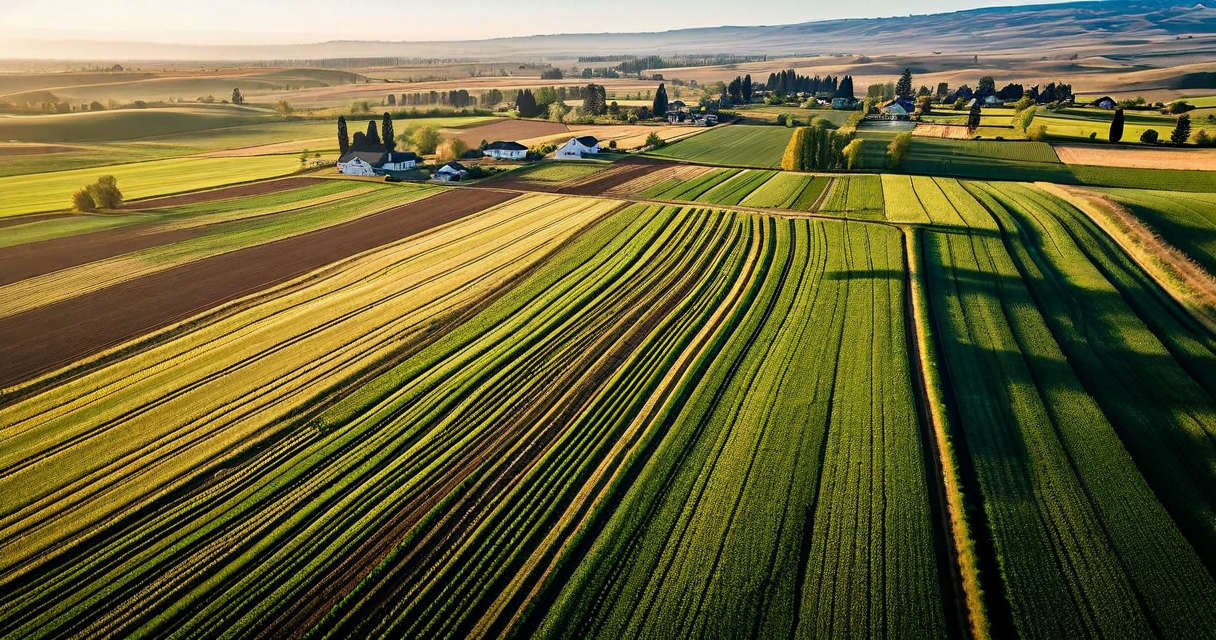
Many growers in the Pacific Northwest don't own a single contiguous block of land — they farm a combination of owned and leased properties scattered across a county or multiple counties. Leased ground adds acreage without requiring capital purchase, but it also adds irrigation infrastructure that the grower doesn't own and often can't modify significantly. Each property has its own pump, its own controller, its own maintenance history, and its own cellular coverage situation.
Managing irrigation across 5 or more separate properties under one operation is fundamentally a logistics problem before it's an agronomy problem. The water needs of each field are manageable. What becomes unmanageable is the physical checking — driving between properties to confirm that pumps are running, that schedules executed, that nothing failed overnight. A grower in the Yakima Valley managing 5 leased hops properties across Yakima and Kittitas counties was spending 3-4 days per week during peak season on pump checks. That's time that wasn't going into harvest prep, market logistics, or anything else.
The Deployment: Five Sites, Different Infrastructure
FarmHQ was deployed across all five properties over a two-week period in spring 2024. Each site presented a different wiring situation. Three properties had standard across-the-line motor starters — the simplest possible installation. One property had a variable frequency drive (VFD) that required connecting to the run-enable terminal rather than the motor starter. One property had an older pump panel with a manual transfer switch that needed a relay interlock to allow remote start without interfering with the manual override capability.
The cellular coverage situation also varied by site. Four sites connected immediately on Cat-M1 with the internal antenna. One site — at the far end of a narrow valley — required an external antenna mounted on a 2-foot mast to get sufficient signal margin for reliable sub-5-second command response. Total installation time across all five sites was approximately 14 hours of labor, including the antenna work. Hardware cost for five FarmHQ modules ran approximately $1,800 total, plus $50/month for the five cellular data plan subscriptions.
The Dashboard: All Five Sites at a Glance
The FarmHQ multi-site dashboard shows all registered devices on a single screen. Each device card displays current status (running, idle, or fault), the time since last status change, the most recent pressure reading, and the active schedule (if any). Switching from one site to the detailed view takes one tap.
For the Yakima Valley grower, the morning workflow changed from 3 hours of driving to 4 minutes of dashboard review. During the 6 AM daily check, he scans the site cards to confirm all pumps that should be running overnight are still running, that no fault alerts fired, and that soil probe readings are within expected range. If a site needs a schedule adjustment, he makes it from the phone. If a site is showing a fault, he can usually diagnose the cause — pressure reading, current reading, relay state — without driving to the site first.
How Alert Routing Works for Multi-Site Operations
FarmHQ allows different alert contacts per device. For the 5-property operation, the primary grower receives all alerts across all sites. The grower's field supervisor — who lives closer to two of the five properties — receives alerts for those specific two sites, so he can respond physically if the alert indicates a problem that needs on-site investigation.
During harvest, when the grower was off-site for days at a time, the field supervisor became the primary responder for those two nearby sites. The alert routing was adjusted in the FarmHQ app to put the supervisor's phone as primary recipient for his two sites and the grower as secondary. That configuration change took about 2 minutes in the notification settings screen.
The alert routing flexibility is particularly useful for operations using irrigation consultants or crop advisors who need situational awareness about a subset of sites. A consultant advising on water management at one property can be added as an alert recipient for that site only, without getting notifications about the other four properties.
Scheduling Across Properties With Different Water Rights
Each of the five properties had different water rights with different priority dates and different diversion limits. The highest-priority right — a pre-1905 senior right on one of the leased properties — allowed aggressive irrigation timing during dry spells when junior rights on other properties were being curtailed. Managing that distinction manually while juggling five sites was error-prone.
FarmHQ's schedule system handles each site independently, which allows each property's irrigation schedule to reflect its specific water right constraints. When curtailment notices arrived from the Yakima Roza Irrigation District, schedules on junior-right properties were adjusted in the FarmHQ app — a 5-minute task rather than an afternoon of phone calls and field checks to confirm compliance.
The pump hour logs for each site also allow independent diversion reporting to the Washington Department of Ecology, which requires separate reporting for each point of diversion. The CSV export from FarmHQ is already organized by device, and each device corresponds to a specific diversion point and water right certificate.
What Changed After One Season
After one full irrigation season (April through October 2024), the Yakima Valley grower tracked several operational changes: field-check driving dropped from an average of 180 miles per week to approximately 55 miles per week — a 70% reduction. Overnight fault events caught by FarmHQ alerts numbered 7 across all five sites during the season; only one required an immediate on-site response. The other six were addressable remotely (schedule reset, manual pump stop, pressure threshold re-check after the alert cleared).
Total estimated diesel savings from reduced driving: approximately $2,800 for the season. Pump repairs avoided from early fault detection: one submersible pump that showed elevated current draw (indicating bearing wear beginning) was taken off schedule and serviced before it failed during peak demand. Repair cost was $340 for a bearing replacement rather than the $2,200-3,500 a failed motor assembly would have required.
What to Consider Before Scaling to Multiple Sites
If you're planning to deploy FarmHQ across multiple sites simultaneously, a few things are worth planning for in advance. First, do a signal check at each site before hardware installation — don't assume Cat-M1 coverage because it works at your home property. Second, document the wiring diagram at each pump panel before installation day — panels that look similar can have different interlock logic that changes the wiring approach. Third, plan for at least one site to need an external antenna. Budget the $60-80 for antenna hardware across the deployment.
The dashboard scales well to 10-20 sites without becoming difficult to navigate. Beyond 20 sites on a single account, the site grouping feature (currently in beta) allows properties to be organized by geography or crop type, which simplifies the morning overview. Contact [email protected] for information about beta access to multi-site grouping.