Why ET-Based Scheduling Gets Abandoned
Evapotranspiration-based irrigation scheduling is theoretically optimal. The model accounts for solar radiation, humidity, wind speed, crop coefficient, and growth stage to calculate exactly how much water the crop consumed since the last irrigation. Apply exactly that amount, and you're replacing what was used — no more, no less.
The reason most growers abandon ET scheduling within two seasons isn't that the model is wrong. It's that the data inputs are inconsistent. The weather station nearest to your field is often 15-25 miles away, and local microclimate differences make the ET number less accurate than it appears. Crop coefficient tables assume uniform stands and average growth stages, not the specific variety and planting date at your field. And translating an ET value in inches per day to a pump run time in hours requires knowing your system's application rate, which is rarely measured precisely.
The result: growers who start with ET scheduling often end up adding a "safety buffer" to every application to cover the model's uncertainty. That safety buffer is exactly the over-irrigation the ET model was supposed to prevent.
The Soil Moisture Target Approach
The alternative that works well in practice is simpler: pick a soil moisture target range and irrigate when the sensor reading drops below the lower bound. Stop when it rises above the upper bound. The sensor tells you directly what's happening in the root zone — no model required, no weather station inputs, no crop coefficient lookup.
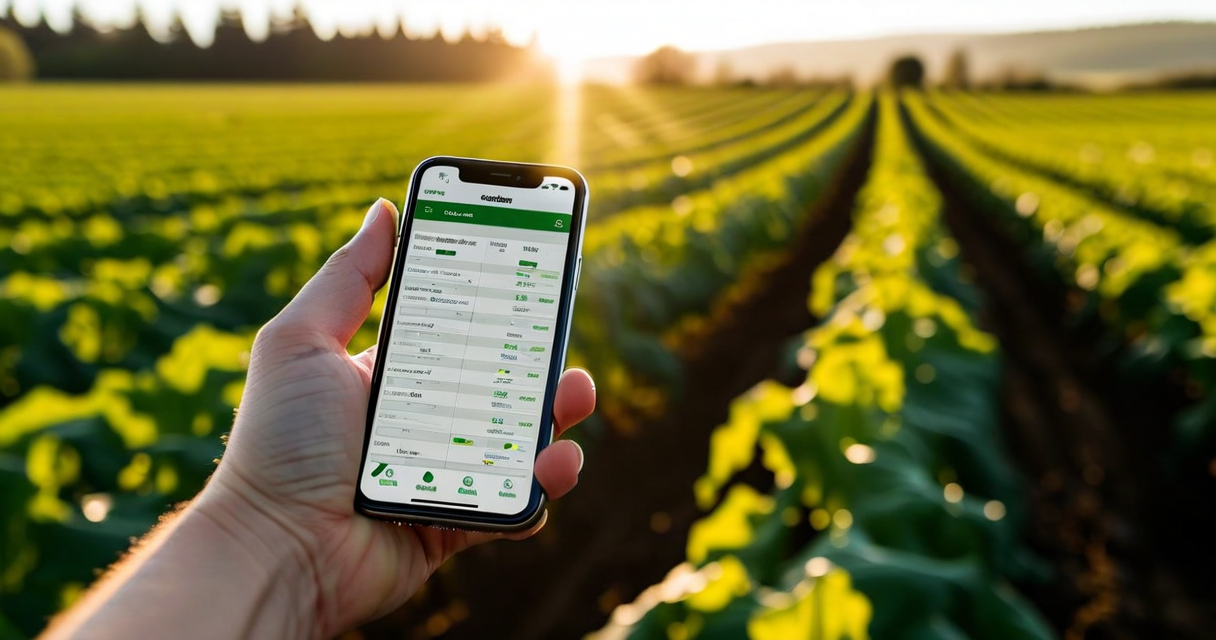
This approach is not new. Soil moisture-based irrigation management has been studied and documented by extension programs at Oregon State, University of Idaho, and UC Davis for decades. What's changed is the cost and accessibility of the sensors and the monitoring infrastructure. A soil moisture probe paired with FarmHQ telemetry makes the data available on a phone screen in real time, and the alert system automates the decision that used to require a field visit.
The one thing the soil moisture target approach requires that ET scheduling doesn't: a calibration season. You need to spend one growing season observing what VWC range corresponds to healthy crop status in your specific soil and field conditions. After that calibration, the system runs largely on autopilot.
Building a Practical Schedule Around Soil Moisture
A practical soil moisture-based schedule for a field crop in silt loam might look like this: set a lower trigger at 28% VWC and an upper stop at 35% VWC at 12-inch depth. When the probe reads 28%, start the pump. When it reads 35%, stop the pump. Log the pump run time for each event.
After three or four irrigation cycles, you'll notice a pattern: it takes roughly the same pump run time to move the probe from 28% to 35% when conditions are similar. A hot week with high wind will deplete the soil faster than a cool cloudy week, and the pump will run more frequently — but each individual run will be about the same duration. That consistency is a sign the system is working correctly and the probe placement is representative.
FarmHQ's scheduling system supports two modes: time-based (run the pump from 6 AM to 10 AM every other day) and trigger-based (start when soil probe drops below threshold X, stop when probe reaches threshold Y). For most field crops, trigger-based scheduling results in fewer total pump hours than time-based scheduling because it responds to actual conditions rather than a fixed interval. A cool week simply results in fewer trigger events.
When to Override the Schedule
The soil moisture target approach has known blind spots. Heat events that exceed the sensor's ability to log quickly enough — extreme heat can deplete shallow soil moisture faster than 15-minute logging captures — can mean the crop is water-stressed before the probe reading triggers an irrigation. During heat domes (like the 2021 Pacific Northwest event), running a fixed 2-hour pre-emptive irrigation at 5 AM before the day's peak temperatures is a better strategy than waiting for a probe trigger that may come too late.
Rain events need manual override too. If 0.8 inches of rain falls overnight, you don't want the pump to start the next morning because the probe hasn't caught up with the infiltration yet — the probe reading will catch up over the next 2-4 hours, but if the pump starts before that, you're wasting water. FarmHQ's scheduling system supports a rain delay feature: if an optional rain sensor input triggers, the automated schedule pauses for a configurable period (typically 12-24 hours).
Pre-season flooding or soil preparation irrigation doesn't fit the normal trigger-based logic and should be done as a manual run from the app rather than through the automated schedule. The automated schedule is for maintaining a target range during the growing season — not for filling soil profile at planting time.
Putting Numbers to the Water Savings
The water savings from soil moisture-based scheduling compared to fixed-time scheduling depend heavily on how conservative the original fixed-time schedule was. Growers who were already running lean schedules see modest improvement — maybe 8-12% reduction in total applied water. Growers who were running conservative schedules as insurance against crop stress often see 20-30% reduction because they were substantially over-applying.
In the Yakima Valley, a hop grower using FarmHQ trigger-based scheduling over one full season reduced pump run hours by 22% compared to the previous year's fixed-time schedule. Total applied water dropped by an estimated 1.4 acre-feet per acre across a 180-acre field — a savings of roughly 250 acre-feet for the season. At a water cost of $45/acre-foot from the irrigation district, that's approximately $11,000 in water charges avoided, plus reduced pumping electricity at $0.08/kWh for the avoided pump hours.
Integrating Scheduling With Water Rights Compliance
For growers operating under water rights with annual diversion limits, soil moisture-based scheduling provides an additional benefit beyond agronomic optimization: automatic documentation of how much water you applied and when. FarmHQ's pump hour logs, combined with a system flow rate calibration (done once, at installation), produce an estimated diversion record that meets the documentation requirements of Oregon's OWRD reporting system and Idaho's water right administration program.
This matters most at the end of a dry summer when water rights are being tracked closely. A grower who can demonstrate that irrigation events were driven by measured soil moisture deficits — rather than arbitrary fixed schedules — is in a stronger position when water district auditors review diversion records.
If you're setting up trigger-based scheduling and want help configuring the soil moisture thresholds for your specific crop and location, email [email protected]. Provide your crop type, soil description, and county — we can usually provide a starting target range based on extension service data for your region that gives you a head start on the calibration season.